
Home › Kings News › Training
TrainingThe rugby kicking game: box kicks, grubbers and the last-tackle kick
How to kick with a purpose in rugby union and rugby league: the box kick, the grubber, the 50:22, the 40/20 and the last-tackle kick, the laws that shape them, and the drills that build a kicking game you can trust under pressure.
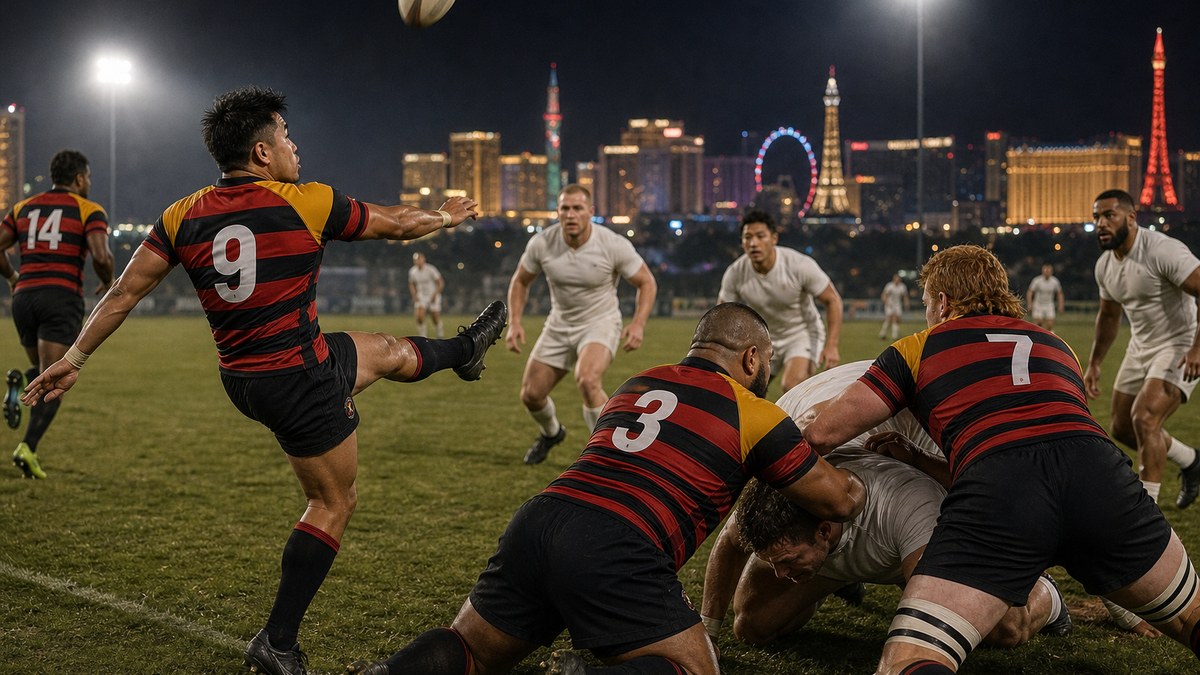
Key facts at a glance
- Box kick: a high kick by the scrum-half from the base of a ruck, aimed at a "box" behind the defense near the touchline; Conor Murray's optimum distance is 22–25 meters (Rugby World)
- Grubber: a kick along the ground through a gap in the defense, landing behind the front line but short of the sweepers (Rugby Coach Weekly)
- 50:22 (union): kick from your own half, the ball bounces in the opposition 22 and then goes into touch, and your team throws in at the lineout (trialled from 2021)
- 40/20 (league): introduced in 1997; successful kicks have been restarted with a tap rather than a scrum since 2014
- 20/40 (league): introduced for the 2020 NRL season; kick from inside your own 20-meter zone to find touch inside the opposition 40 and earn a new set with a tap
- Union offside from kicks: since competitions starting after July 1, 2024, a player in front of the kicker can no longer be put onside by an opponent running five meters or passing (World Rugby Law 10.7)
- Tens: every conversion is a drop kick within 30 seconds, which matters at the APR Games 2027 in Las Vegas
The rugby kicking game is the part of the sport that looks simplest from the stands and is hardest to do well on the field. Anyone can boot the ball downfield. Very few players can drop it the same way every time, put it on a chosen patch of grass 25 meters away, and give their chasers a fair chance to win it back. That is the difference between a kick that relieves pressure and a kick that gives the ball away.
At the Vegas Kings we are home to rugby union and rugby league players, and kicking is one of the places where the two codes speak different dialects of the same language. Union kickers think about ruck protection, offside lines and the 50:22. League kickers think about the tackle count, the last-tackle option and the 40/20. This guide covers both, explains the laws that change the decisions, and finishes with drills you can run this week. If you are new to the differences between the codes, start with our guide to rugby union vs rugby league.
Why does kicking matter so much in modern rugby?
Kicking is how teams trade possession for position. In both codes, a team that wins the territory battle forces its opponents to start attacks deep in their own half, where a mistake costs points. A team that kicks badly hands over the ball and the field at the same time.
In rugby union, kicking is also a way to create a contest. Rugby World's November 2024 explainer on the box kick notes that at elite level it is mostly used to create a contestable ball in the air for the chasers, not just to get the ball off the field. Every kick is a 50:50 moment that the better-drilled team can win.
In rugby league, the tackle count makes kicking almost compulsory. A team has six tackles, a rule that dates from 1971 according to the Sydney Roosters' history of the game's evolution. If it has not scored by the last tackle, it usually kicks, because being tackled on the sixth hands the ball over where it lies. That turns the last-tackle kick into a set piece of its own.
What are the main types of rugby kick?
Before we get into the detail, here is a quick map of the kicks covered in this guide, who usually takes them and what they are for. Competitions can change their rules, so always check the laws for the event you are playing.
| Kick | Code | Usually taken by | Main purpose | Law or reward to know |
|---|---|---|---|---|
| Box kick | Union (also used in league) | Scrum-half (9) | Contestable high ball or exit from your own end | Chasers must be onside; kickers need ruck protection |
| Grubber | Both | Fly-half, centers, halves | Get behind a rushing or crowded defense | Teammates must be behind the kicker to chase legally in union |
| Up-and-under (bomb) | Both | Fly-half, fullback, halves | Contest in the air near the try line or in midfield | Catcher in the air must not be tackled; contest the ball, not the player |
| Kick for touch / 50:22 | Union | Fly-half, fullback | Territory and the lineout throw | Kick from own half, bounce in opposition 22, then touch |
| Last-tackle kick | League | Halfback, five-eighth, hooker | Pin the opposition deep or win a repeat set | If the attack sends the ball dead in-goal, the defense can get a seven-tackle set |
| 40/20 and 20/40 | League | Halves, fullback | Keep the ball with a tap restart | 40/20 since 1997; 20/40 since 2020 |
| Drop kick (restart, conversion, field goal) | Both | Fly-half, halves, fullback | Restarts and points | In tens, all conversions are drop kicks within 30 seconds |
Sources: Rugby World, RugbyPass, NRL.com, the Sydney Roosters and World Rugby; see the full list at the end of this article.
How do you box kick in rugby?
The box kick is the scrum-half's signature kick. Rugby World describes it as a high kick from the base of a ruck, aimed toward the nearest touchline and landing, after plenty of hang time, in a "box" of grass further upfield, behind the defense's front line. It can be an exit from your own territory, but at the top level it is mainly a way to create an aerial contest.
The drop and the contact
Ireland and Lions scrum-half Conor Murray, writing in Rugby World (first published in the March 2019 magazine), says the ball drop is the most important part. He drops the ball with two hands rather than one, because with one hand it stays on the ball longer and gives him less time to correct the drop, and he strikes "right under the ball, on the tip." That is the core of the skill: a repeatable drop, a clean strike under the ball, and a high, controlled flight.
Distance and hang time
Murray puts the optimum box-kick distance at 22 to 25 meters, depending on how quick the wings are and how high the kick goes. He marks out a box about 25 meters away in training and tries to land the ball in it. A kick that goes too far is just a gift to the fullback; one that is too short is caught by the first defender with no pressure on him.
Protection and the chase
The kicker needs space. Murray explains that blockers, usually forwards at the ruck, must know what is in front of them so defenders cannot run through, without getting in the way of the kick themselves. His wings and fullback rehearse how long he takes to release the kick so they can time their run and stay onside. A box kick is only as good as the chase: without one, it is a turnover.
The box kick gets a bad name because so many are aimless. Done right, it is a set play: the scrum-half, the blockers and the chasers all know the target, the height and the timing before the ball comes back. If your wings do not know when the kick is coming, you are not kicking for a contest. You are just kicking.
What changed with offside from kicks in rugby union?
Kicking strategy in union shifted in 2024. In a release dated May 9, 2024, World Rugby confirmed a rewrite of Law 10.7: it is no longer possible for a player in front of the kicker to be put onside when an opposition player catches the ball and runs five meters, or passes it. Laws 10.1 and 10.4 were also clarified so that offside players must make an attempt to retreat. The change applied to competitions beginning after July 1, 2024.
The reason was the "kick tennis" seen in some matches, where teams traded long kicks while offside players waited for the catcher to run five meters and release them. Under the rewritten law, players in front of a teammate's kick have to work back and be put onside the proper way, usually by the kicker or an onside teammate running past them. For the receiving team, that means more space to counter-attack; for the kicking team, it means the chase line has to be organized from behind the ball.
The same 2024 package introduced a closed trial of a 60-second limit for conversions, in line with the time allowed for penalty kicks at goal, and RUCK reported in January 2025 that the 60-second conversion clock was coming into the 2025 Six Nations. Kickers who rely on long routines now have less time to work with.
How does the grubber kick work?
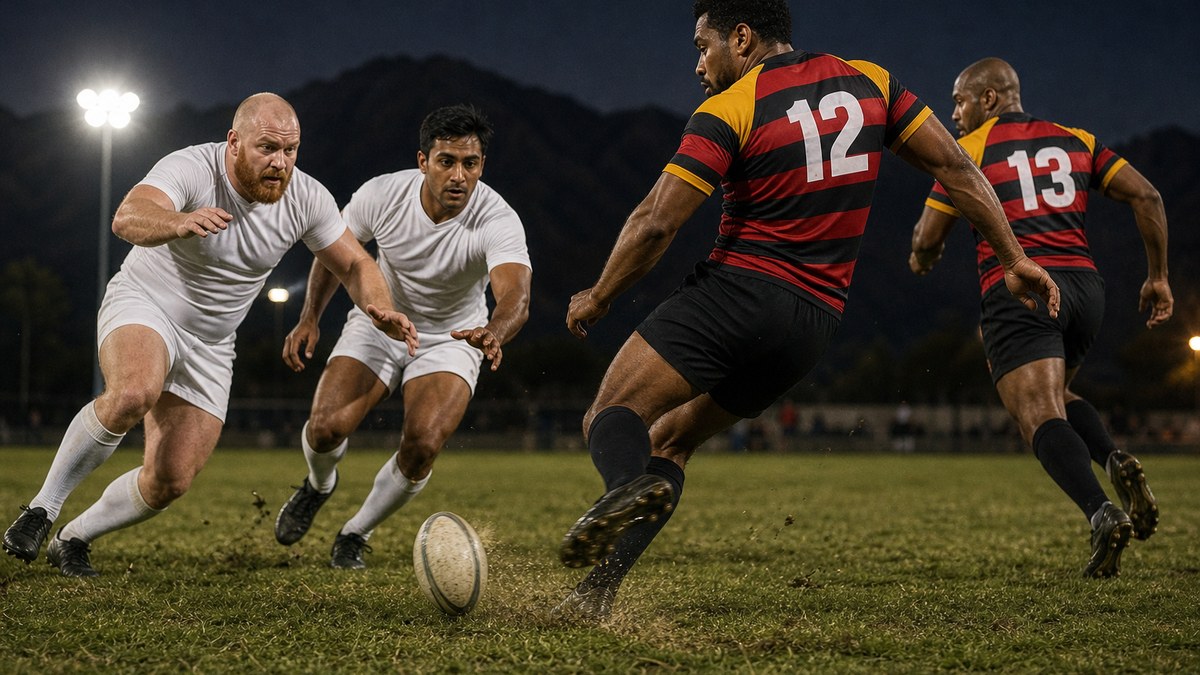
The grubber is the kick for when the defense is in your face. Rugby Coach Weekly's guide by Dan Cottrell describes it as a way to break down a strong, well-organized defense that moves forward quickly, or to beat a superior number of defenders. It is most effective on the move: the ball carrier runs forward to draw defenders in, then kicks the ball along the ground between two of them.
- The drop: drop the ball from about waist height onto the foot.
- The contact: strike with the top of the foot or the instep so the ball stays low and rolls end over end.
- The target: land it behind the front line of defense, but not so deep that the sweeping defenders can reach it first.
- The chase: the kicker and the support players must chase hard, because the chase decides whether the kick works.
In rugby league the grubber is a classic attacking option close to the line, especially on the last tackle, where a ball that dribbles into the in-goal area forces the defending team to scramble. In union, a grubber that the defenders have to ground in their own in-goal gives the attack a goal-line drop-out and the ball back (more on that below).
What is the 50:22 kick in rugby union?
The 50:22 is the territorial kick that rewards a skilled boot. As Rugby World explained in May 2025, if a team kicks from anywhere in its own half and the ball bounces inside the opposition 22 before going into touch, the kicking team gets the throw at the lineout instead of the opposition. It was one of the law trials World Rugby introduced in 2021 with a player-welfare goal: forcing teams to drop players back to cover kicks, which frees up space across the pitch.
RugbyPass's referee explainer from September 2021 adds some detail that players often miss:
- The phase that ends with the kick must start in the kicking team's own half. A new phase starts after every tackle, ruck or maul.
- Passing the ball back across halfway from a scrum or lineout for an immediate kick does not count; the receiving team keeps the throw.
- A 50:22 can be gained directly from a free kick.
The prize is huge: a lineout throw deep in opposition territory, often the launch pad for a driving maul. The Vegas Blackjacks' guide to the rolling maul shows what forwards do with that kind of field position.
The goal-line drop-out
Another 2021 trial that stuck is the goal-line drop-out. RugbyPass explains that if the attacking side kicks, carries or knocks the ball into in-goal and the defenders ground it or it becomes unplayable, play restarts with a drop-out from anywhere along the defending team's goal line. The kick must travel five meters, the receiving team must retreat to the five-meter line, and the kicker's teammates must be behind the ball. For an attacking kicker, that means a grubber or a high ball into the in-goal area is a low-risk way to win the ball back near the line.
How do rugby league teams use the last-tackle kick?
In league, the sixth tackle is decision time. A team that has not scored or worked into a good position kicks on the last tackle, and that kick decides where the next set starts. There are two broad options.
The attacking kick near the line. Inside the opposition's red zone, halves look for a high ball to a tall winger, a grubber into the in-goal, or a chip into space. The aim is to score directly or force the defense to scramble in its own in-goal area under pressure.
The territorial kick from deep. From further out, the job is to pin the opposition in its own end, with a long, low-bouncing kick that turns the fullback and wingers and a chase line that arrives together. A kick that goes dead too early can backfire: the Roosters' history of the game notes that since 2014, when the attacking side is responsible for the ball going dead in-goal, the defending side receives a seven-tackle set starting with a tap on its 20-meter line.
The NRL also tweaked that area for 2026. In its February 4, 2026 release, the ARL Commission confirmed there will be no seven-tackle set following a knock-on in-goal by the attacking team. The same release said the proposed change letting a conceding team choose to kick off or receive after a try would not proceed in 2026, but would be trialled late in the season in games with no bearing on the finals.
Union players switching to league are often surprised by how much the last-tackle kick dictates the game. League players switching to union are surprised by how little time the ruck gives them to kick. Both groups get better when they treat every kick as part of a plan: where it lands, who chases, and what happens if it goes wrong.
How do the 40/20 and 20/40 work in rugby league?
These are league's reward kicks. According to the Sydney Roosters' timeline of rule changes, the 40/20 was introduced in 1997, letting a team that kicks from behind its own 40-meter line into touch inside the opposition's 20-meter zone retain possession. Since 2014 the restart after a successful 40/20 has been a tap restart rather than a scrum.
The 20/40 came in for the 2020 NRL season. NRL.com reported in December 2019 that a team kicking from within its own 20-meter zone that finds touch inside the opposing team's 40-meter line earns another set via a tap kick, working in a similar way to the 40/20. It rewards a long, accurate exit kick from deep.
The union equivalent is the 50:22, and the logic is the same in both codes: a kicker who can find touch deep in enemy territory from their own end keeps the ball and gains the field. That is why elite fullbacks and halves practice touch-finders from both wings and with both feet.

How should you train your kicking game?
Kicking is a skill, so it improves with quality repetitions, not just volume. Build it in short, focused blocks after a proper warm-up, and add pressure as you get more consistent. Here is a simple progression the Kings use as a template for union and league players. It is a coaching framework, not a medical program: if anything hurts, stop and see a qualified professional.
1. Drop and contact (every session)
Ten minutes of slow, close-range kicking to a partner, focusing only on the drop and the strike. For box kicks, use Murray's two-handed drop and strike under the tip of the ball. For grubbers, drop from waist height and strike with the top of the foot. Kick off both feet. The goal is the same flight every time.
2. Target work
Mark a box about 25 meters away for box kicks and a box just beyond a line of tackle pads for grubbers, as in Rugby Coach Weekly's drill where the kicker takes a pass, moves forward and grubbers between two pads into a nominated box. Score yourself out of ten and keep a log so you can see real progress.
3. Add the chase
Every kick gets a chase. In union, rehearse the timing so chasers start from onside positions; in league, rehearse the kick-chase line so it arrives together and nobody is left a meter offside. The Vegas Knights' guide to rugby defense systems and line speed covers how a chase line becomes a defensive line, and the Vegas Lions' guide to rugby speed training will help your chasers win the first 10 meters.
4. Add pressure
Progress from static targets to slow-moving defenders, then to live pressure on the kicker, and finally small-sided games where any attacker can kick. Rugby Coach Weekly suggests a five-on-five game where any attacker may grubber and defenders must hold their line without dropping back, then fewer attackers against an overloaded defense.
5. Catch and contest (safely)
Every kicking drill is a catching drill for someone else. Practice high-ball catching from a partner's kick before adding a competing chaser. Contesting in the air is a contact skill with real injury risk: learn it progressively under a qualified coach, contest the ball rather than the player, and never take a player in the air off their feet. Tackling the catcher after they land must be low and legal, as the Vegas Knights explain in how to tackle in rugby safely.
The gold standard is a kicker who can do it in the last ten minutes, not just the first. Put your target work at the end of a conditioning session once a week so your technique holds up when your legs are gone. Our 6-week pre-season conditioning plan shows where to fit it.
Which positions do the kicking?
In union, the scrum-half owns the box kick, the fly-half runs the tactical and territorial game, and the fullback and wings return kicks and often kick back. In league, the halfback and five-eighth handle most last-tackle kicks, with the fullback and sometimes the hooker as extra options. But every back in both codes should be able to kick competently off either foot, and every player should be able to catch a high ball. Our guide to rugby positions in union and league explains each role in detail.
How does kicking work in tens at the APR Games?
The APR Games 2027 in Las Vegas is played 10-a-side, and tens puts a special premium on the drop kick. Under World Rugby's 10s variations, every conversion must be a drop kick taken within 30 seconds of the try, and the team that scores kicks off. That means your fly-half or fullback needs a reliable drop kick under time pressure, and your whole team needs to win restarts. Our guide to rugby tens explained covers the full format.
With fewer defenders covering a full-size field, a well-placed grubber or chip can be even more dangerous in tens than in 15s, and a poor kick is punished just as quickly. Full rules and squad sizes for the Games will be confirmed with player registration.
Bring your kicking game to the APR Games
The APR Games 2027 in Las Vegas, Memorial Day weekend May 29–31, 2027: 10-a-side rugby, two 20-minute halves, evening kickoffs on three fields. Men's Elite ($10,000 prize pool), Women's Social ($5,000) and Youth divisions. Player entry is $299 and includes a team jersey, a full kit bag, at least three pool games and opening-night access. The APR coaching clinic runs May 28–31, 2027.
Join the APR Games waitlistWhere can you see elite kicking in Las Vegas?
You do not have to wait for the APR Games. Rugby League Las Vegas returns to Allegiant Stadium on Saturday, February 27, 2027, with Melbourne Storm v Wests Tigers, Parramatta Eels v Gold Coast Titans and a Super League game between Bradford and Leigh. Watch how the halves manage the last tackle and how the chase lines arrive. Our Rugby League Las Vegas 2027 guide covers the weekend.
Coming to town for a game? APR partner Luna Appleton covers where to stay, eat and celebrate in Vegas. And if you are building a training routine around game days, APR partner Clann13 makes supplements for athletes; as always, talk to a qualified professional about what is right for you. Follow the wider game on APR's global rugby news, pick up team gear in the APR merch store and meet the other franchises on the APR teams page.
New to the game altogether? Downtown Rugby's guide to rugby rules for beginners is the best place to start before you pick up a ball, and the free weekly APR newsletter, The Breakdown, breaks down one skill every week.
Frequently asked questions
What is a box kick in rugby?
A box kick is a high kick, usually by the scrum-half from the base of a ruck, aimed toward the touchline so it lands in a box of grass behind the defense. It is used to exit your own territory or, at elite level, to create a contestable ball for the chasers.
How far should a box kick go?
Ireland scrum-half Conor Murray puts the optimum distance at 22 to 25 meters, depending on the speed of the wings and the height of the kick. Too long and the fullback catches it unopposed; too short and the first defender catches it easily.
What is a grubber kick?
A grubber is a kick along the ground through a gap in the defense. The ball is dropped from about waist height and struck with the top of the foot, so it rolls end over end behind the front line but short of the sweeping defenders.
How does the 50:22 work?
If a team kicks from its own half and the ball bounces inside the opposition 22 before going into touch, the kicking team throws in at the lineout. The phase must start in the kicker's own half, and passing the ball back over halfway from a scrum or lineout for an immediate kick does not count.
What is the difference between a 40/20 and a 20/40?
Both are rugby league reward kicks. A 40/20 is kicked from behind your own 40-meter line into touch inside the opposition 20-meter zone. A 20/40, introduced for the 2020 NRL season, is kicked from inside your own 20-meter zone to find touch inside the opposition 40. Both earn a new set with a tap restart.
Why do rugby league teams kick on the last tackle?
A league team has six tackles. If it is tackled on the sixth, it hands the ball over where it lies, so teams usually kick on the last tackle to gain territory or try to score, forcing the defense to start deep in its own half.
What changed in the offside law for kicks in rugby union?
Since competitions beginning after July 1, 2024, a player in front of a teammate's kick can no longer be put onside when an opponent catches the ball and runs five meters or passes it. Offside players must try to retreat and be put onside by the kicker or an onside teammate.
How long does a kicker have for a conversion?
World Rugby trialled a 60-second limit for conversions from July 2024, in line with penalty kicks at goal, and it was in use for the 2025 Six Nations. In tens, a conversion must be a drop kick within 30 seconds of the try.
Is contesting a high ball dangerous?
It carries real injury risk. Learn aerial contests progressively under a qualified coach, contest the ball rather than the player, and never tackle a player in the air. Any tackle after the catcher lands must be low and legal.
How often should I practice kicking?
Short, focused blocks of quality repetitions after a proper warm-up work better than long sessions of tired kicking. Start with the drop and contact, add targets, then add the chase and pressure, and build volume gradually.
Keep reading
Sources
- Rugby World: What is a box kick? An explainer (November 2, 2024)
- Rugby World: Conor Murray, how to master box-kicking (May 31, 2020; first published March 2019)
- Rugby Coach Weekly: Developing the grubber kick into an attacking weapon (accessed November 2026)
- Rugby World: What is a 50:22 kick? (May 30, 2025)
- RugbyPass: Ref Watch, 50:22 and the goal-line drop-out explained (September 20, 2021)
- World Rugby: Rugby fan-focused law changes confirmed (May 9, 2024)
- RUCK: World Rugby law changes for the 2025 Six Nations (January 2, 2025)
- NRL.com: ARL Commission endorses key changes, including the 20/40 (December 6, 2019)
- NRL.com: ARLC confirms 2026 on-field rule changes (February 4, 2026)
- Sydney Roosters: Game's evolution, rule-change timeline (accessed November 2026)
- World Rugby, 10s variations: Law 8 Scoring (accessed November 2026)
- American Pro Rugby: APR Games 2027
Laws and competition rules change over time; this guide reflects the World Rugby, NRL and other sources listed as published at the time of writing (November 2026). Always check your competition's current laws. APR Games rules and squad sizes will be confirmed with player registration. Rugby is a contact sport: learn tackling, aerial contests and other contact skills progressively under a qualified coach. Partner mentions are not product or health claims; speak to a qualified professional about supplements and training.