
Home › Kings News › Rugby 101
Rugby 101Rugby union vs rugby league: the differences explained
Fifteen players or thirteen. Rucks or the play-the-ball. Five points or four. Here is how the two rugby codes really differ, where they came from, and why the Vegas Kings are home to players from both.
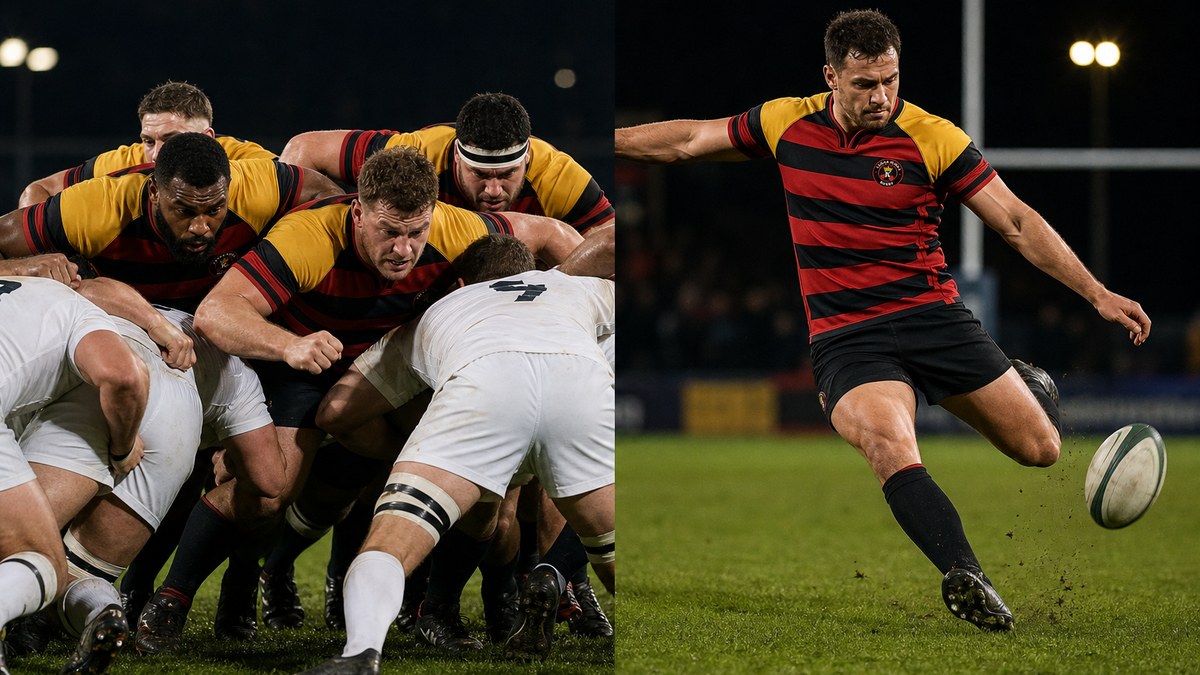
Key facts at a glance
- Players: 15 a side in union, 13 a side in league
- Try: 5 points in union, 4 points in league
- Possession: union has no tackle limit; league hands the ball over after six tackles
- Set pieces: union has contested scrums and lineouts; league has no lineouts and restarts with a play-the-ball
- The split: the Northern Rugby Football Union (later rugby league) was formed at the George Hotel, Huddersfield, on 29 August 1895
- In Las Vegas: Rugby League Las Vegas returns to Allegiant Stadium on 27 February 2027; the APR Games, played as 10-a-side rugby, run May 29–31, 2027
If you have ever watched a rugby match in Las Vegas and wondered why one game looks like a non-stop wrestle for the ball and another looks like a series of full-speed collisions followed by a quick tap of the boot, you have seen the difference between rugby union and rugby league. They share an ancestor, an oval ball and a love of contact, but they are separate sports with separate laws, separate governing bodies and very different rhythms.
At the Vegas Kings we are home to rugby union and rugby league players alike, so we get this question all the time. This guide breaks down every major difference, explains where the two codes came from, and shows what each one asks of a player. If you are new to the game, start here. If you already play one code, this is your map to the other.
Why are there two kinds of rugby?
Both codes come from the same 19th-century English football tradition. The split was about money and work, not about how the game should be played. In the 1890s many players in the industrial north of England were working men who lost wages when they took time off to play. Northern clubs wanted to compensate them for that lost time, known as broken-time payments. The Rugby Football Union, which insisted the game remain strictly amateur, refused.
On 29 August 1895, 22 clubs from Yorkshire and Lancashire met at the George Hotel in Huddersfield and formed the Northern Rugby Football Union. Their founding principle was payment for "bona fide broken time". That body became the Rugby Football League, and the game it governed became rugby league.
Once the two codes were separate, they evolved separately. Between 1895 and 1908 the northern game made its most significant law changes, including cutting teams to 13 players and replacing the contested ruck with the play-the-ball. Those changes were designed to make the game faster and more of a spectacle for paying crowds, and they are still the core of league today.
Rugby union stayed amateur for a century. In late August 1995, the International Rugby Football Board, meeting in Paris, finally allowed professionalism, almost exactly 100 years after the split. Today both codes are professional sports, played around the world, and both have growing communities in the United States.
The split was never really about which game was better. It was about who got to play. That is a story we relate to in Las Vegas, where most players come to rugby as adults, from other sports, with jobs and families. Union or league, the door should be open.
Rugby union vs rugby league: the full comparison
Here is the side-by-side view. The sections below go deeper on the differences that change how the game feels on the field.
| Feature | Rugby union | Rugby league |
|---|---|---|
| Players on the field | 15 per team (8 forwards, 7 backs) | 13 per team (6 forwards, 7 backs) |
| Try | 5 points | 4 points |
| Conversion | 2 points | 2 points |
| Penalty goal | 3 points | 2 points |
| Drop goal / field goal | 3 points | 1 point (2 points from beyond 40 m in the NRL) |
| Penalty try | 7 points (no conversion) | Awarded under the posts, then converted |
| Possession after a tackle | Contested ruck, unlimited phases | Uncontested play-the-ball, six-tackle limit |
| Ball out of play (touch) | Lineout | No lineout (NRL restarts with a play-the-ball or scrum) |
| Scrums | Contested, eight forwards a side | Rare and largely uncontested |
| Bench | Replacements (up to 8 at elite level) | Interchanges (4 bench players; 8 interchanges per game in the NRL since 2016) |
| Match length (15s / 13s) | 80 minutes, two 40-minute halves | 80 minutes, two 40-minute halves |
| World governing body | World Rugby | International Rugby League |
How many players are on a rugby union team vs a rugby league team?
A rugby union team fields 15 players: eight forwards (two props, a hooker, two locks, two flankers and a number 8) and seven backs (scrum-half, fly-half, two centres, two wings and a fullback).
A rugby league team fields 13 players: six forwards (two props, a hooker, two second-rowers and a lock) and seven backs (halfback, five-eighth, two centres, two wingers and a fullback).
Two fewer players on the same size field means more space for everyone. League players defend wider channels, and each forward carries the ball far more often. Union forwards spend more of their energy on contests for the ball: scrums, lineouts, rucks and mauls.
How does scoring differ?
The try is the main event in both codes, but it is worth more in union. Under World Rugby's Law 8, a try is worth 5 points, a conversion 2, a penalty goal 3 and a drop goal 3. A penalty try is worth 7 points and needs no conversion.
In league a try is worth 4 points, a conversion 2, a penalty goal 2 and a field goal (league's name for a drop goal) 1 point. The NRL added a twist from the 2021 season: a field goal kicked from beyond the 40-metre line is worth 2 points.
The result is that kicking for goal matters more in union. A union side can stay in a game with penalty goals worth 3 points each, while in league, penalty goals are worth less and teams usually look for a try.
What is the six-tackle rule in rugby league?
This is the single biggest difference between the codes. In rugby league, the attacking team has six tackles to make progress. After each tackle, the tackled player gets to their feet and plays the ball, rolling it back with a foot to a teammate standing behind. The defenders must retreat 10 metres. After the sixth tackle, possession goes to the other team.
That is why league teams usually kick on the last tackle: they would rather send the ball deep into the opposition half than hand it over in a dangerous position. It gives league its distinctive rhythm of sets: five hard carries up the middle, then a kick.
The NRL also uses the "six again" call. Since 2020, instead of awarding a penalty for many ruck and 10-metre offences, the referee can give the attacking team a fresh set of six tackles. Repeated or deliberate offences can still draw a penalty and a sin bin.
What happens at the breakdown in rugby union?
In rugby union there is no tackle limit. A team can keep the ball for as long as it can protect it. When a player is tackled, they must release the ball, and players from both teams can contest for it on their feet. That contest is the ruck. If the ball is held up by a standing player and teammates bind on, it becomes a maul.
Because the ball is always contestable, union rewards players who can win turnovers at the breakdown, and teams can build long sequences of phases. It also means union games can feature long periods of tight, grinding play before the ball goes wide.
League teaches you to carry hard and to defend in a straight line. Union teaches you to fight for the ball on the ground. The players who switch codes and learn both usually come out better at each.
Do both codes have scrums and lineouts?
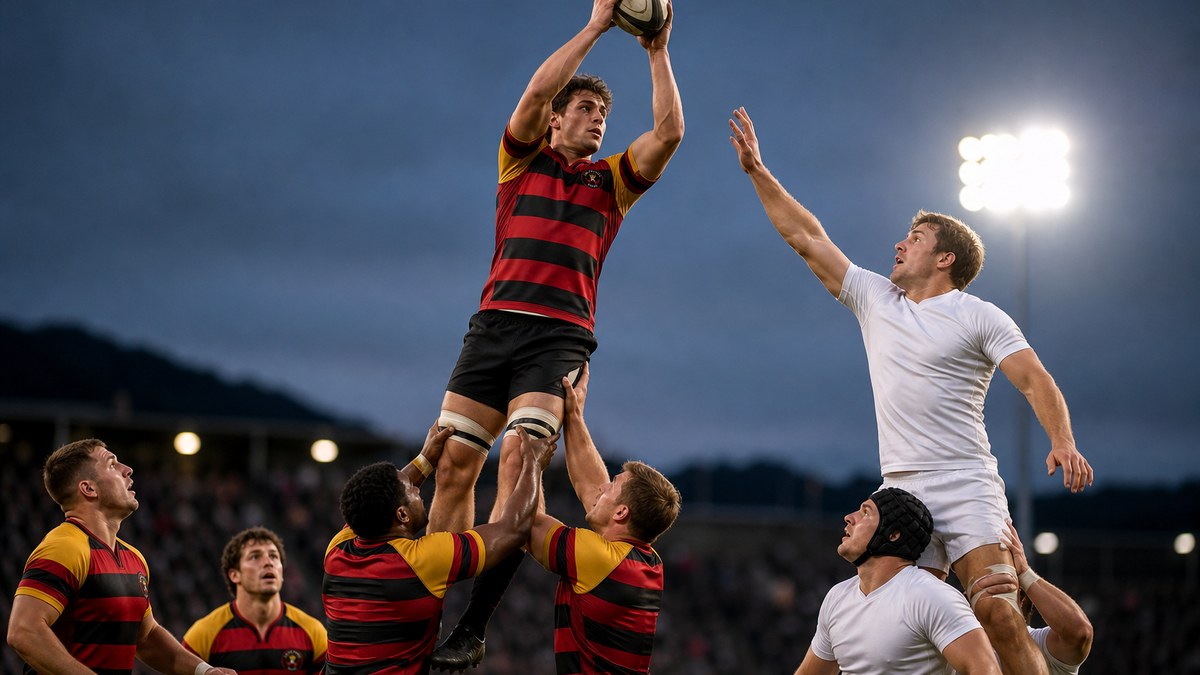
Union does, and they are central to the game. A union scrum is a contested set piece with eight forwards a side, and winning penalties at scrum time can decide matches. When the ball goes into touch, the game restarts with a lineout, where forwards lift jumpers to compete for the throw-in.
League has no lineouts at all. Scrums still exist in league but are rare and largely uncontested. In the NRL, since the 2021 season, when the ball or a player goes into touch, play generally restarts with a play-the-ball instead of a scrum. The effect is less stoppage time and more ball in play.
Which code is faster?
League usually has more ball-in-play time, while union has more contested phases. With fewer set pieces, a tackle limit and a quick play-the-ball, league is built around repeated high-speed carries and tackles. Union is more varied: a game can swing between tight forward battles at the scrum, maul and ruck and wide attacking play from the backs.
Neither code is "easier". League demands repeat high-intensity effort in attack and defence. Union demands more technical specialisation, especially in the front row, the lineout and the breakdown.
Which positions translate between codes?
Players switch codes more often than people think, and some positions carry over more naturally than others:
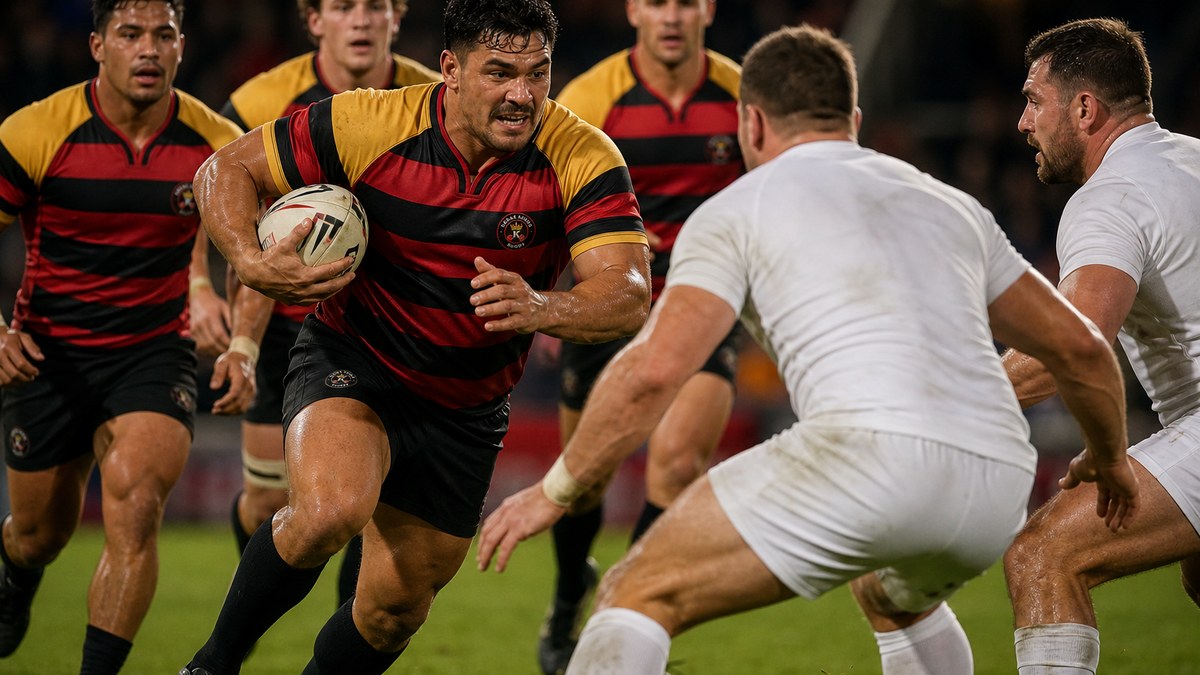
- Backs and outside backs (wings, centres, fullbacks) often transfer well. Running lines, evasion and one-on-one tackling are core skills in both codes.
- Halves (union scrum-half and fly-half, league halfback and five-eighth) need to learn new decision patterns: league's set structure and last-tackle kicking vs union's phase play.
- Back-row forwards in union and edge forwards in league share a lot: carrying, tackling and work rate.
- Front-rowers face the biggest adjustment. Union props and hookers live in the scrum, while league props spend their time carrying and tackling in open play.
- Locks in union are lineout specialists, which is a skill league does not use.
What is rugby sevens and rugby tens?
Both are short-format versions of rugby union. Sevens is the Olympic format, played seven a side on a full field. Tens (10s) sits between sevens and the 15-a-side game, typically with five forwards and five backs.
The APR Games 2027, where the Vegas Kings are one of five founding franchises, is played as 10-a-side rugby: two 20-minute halves, evening kickoffs and three fields over Memorial Day weekend, May 29–31, 2027, in Las Vegas. Full rules and squad sizes will be confirmed with player registration. Tens is a great fit for players from both codes: there is more space than in 15s, but the forwards still matter.
Play for a crown in Las Vegas
The APR Games 2027: Men's Elite ($10,000 prize pool), Women's Social ($5,000) and Youth divisions. Player entry is $299 and includes a team jersey, a full kit bag, at least three pool games and opening-night access.
Join the APR Games waitlistRugby league in Las Vegas
Las Vegas has become an unlikely home for rugby league. The NRL opened its 2024 season with a double-header at Allegiant Stadium on 2 March 2024: Manly Sea Eagles vs South Sydney Rabbitohs and Brisbane Broncos vs Sydney Roosters, with about 40,000 tickets sold before kickoff.
Rugby League Las Vegas 2027 returns to Allegiant Stadium on Saturday 27 February 2027, with week-long activities from Wednesday 24 February. The NRL card is Melbourne Storm vs Wests Tigers and Parramatta Eels vs Gold Coast Titans, plus a Super League match between Bradford Bulls and Leigh Leopards. If you are a league fan in the city, that weekend is the one to circle.
Coming to town for it? Our partner Luna Appleton covers where to stay, eat and celebrate in Las Vegas.
Rugby union in the United States
Union is the code most Americans meet first, through college clubs, high school programs, adult clubs and the national team, the USA Eagles. Sevens has a strong American following too, helped by the Olympics. Whichever code you start in, the fastest way to improve is to play regularly, train the basics and get around experienced players. American Pro Rugby's free weekly newsletter, The Breakdown, includes one skill broken down every week.
Why the Vegas Kings play both
The Kings were founded in 2024 as a home for rugby union and rugby league players alike. In a city where most players arrive from other sports, other countries or other codes, we think the smartest thing a club can do is welcome all of them.
League players bring hard carrying, line-speed defence and fitness for repeat efforts. Union players bring breakdown skills, set-piece know-how and tactical kicking. Put them on the same pitch and they push each other. That is the Kings Code in practice: Ruthless, Flashy, Gold Standard, Royalty.
If you want to see where you fit, start with the Kings Code, follow Kings News for training and squad updates, and get on the APR Games waitlist. Want to see the rest of the league? Meet the Vegas Knights, Vegas Blackjacks, Downtown Rugby and Vegas Lions.
Union or league is the wrong argument. The right question is: how fast can you learn? Every code switch we see teaches the same lesson. The basics, catch, pass, tackle, carry, travel everywhere.
Frequently asked questions
What is the main difference between rugby union and rugby league?
Union has 15 players a side and unlimited, contested possession at the ruck. League has 13 players a side and a six-tackle limit, after which the ball goes to the other team. League also has no lineouts and few scrums.
How many points is a try in rugby union and rugby league?
A try is worth 5 points in rugby union and 4 points in rugby league. A conversion is worth 2 points in both codes.
Why did rugby split into union and league?
In 1895, northern English clubs wanted to compensate working players for wages lost while playing ("broken time"). The Rugby Football Union refused, so 22 clubs formed the Northern Rugby Football Union at the George Hotel in Huddersfield on 29 August 1895.
When did rugby union become professional?
Rugby union allowed professionalism in late August 1995, when the international board met in Paris, almost exactly 100 years after the 1895 split.
Is rugby league faster than rugby union?
League usually has more ball-in-play time and repeated high-speed carries because of the six-tackle rule and fewer set pieces. Union has more contested phases and set pieces. Both are demanding in different ways.
Is there a lineout in rugby league?
No. Rugby league has no lineouts. In the NRL, play generally restarts with a play-the-ball when the ball goes into touch.
What is a play-the-ball?
After a tackle in rugby league, the tackled player stands up and rolls the ball back with a foot to a teammate behind them. Defenders must retreat 10 metres. It replaces union's contested ruck.
Can a rugby union player switch to rugby league?
Yes, and it happens often. Backs and back-row forwards usually adjust fastest. Front-rowers and lineout specialists face the biggest change because scrums and lineouts matter much less in league.
Is the NRL coming back to Las Vegas?
Yes. Rugby League Las Vegas 2027 is on Saturday 27 February 2027 at Allegiant Stadium, with Melbourne Storm vs Wests Tigers, Parramatta Eels vs Gold Coast Titans and Super League's Bradford Bulls vs Leigh Leopards.
Which code is played at the APR Games?
The APR Games 2027 is played as 10-a-side rugby with two 20-minute halves, May 29–31, 2027, in Las Vegas. Full rules and squad sizes will be confirmed with player registration.
Keep reading
Sources
- World Rugby, Law 8: Scoring
- NRL.com: New NRL rules explained (scrums, field goals, six agains), February 2021
- NRL.com: NRL to reduce number of interchanges, July 2015
- Rugby Football History: The schism of 1895
- History of rugby league (Wikipedia)
- TeachPE: Rugby league vs rugby union
- NRL.com: Las Vegas season launch, 1 March 2024
- NRL.com: Rugby League Las Vegas 2027
- American Pro Rugby: APR Games 2027
Laws differ between competitions and change over time; this guide reflects World Rugby's laws and NRL rules as published at the time of writing (October 2026). Check your competition's current laws before you play.